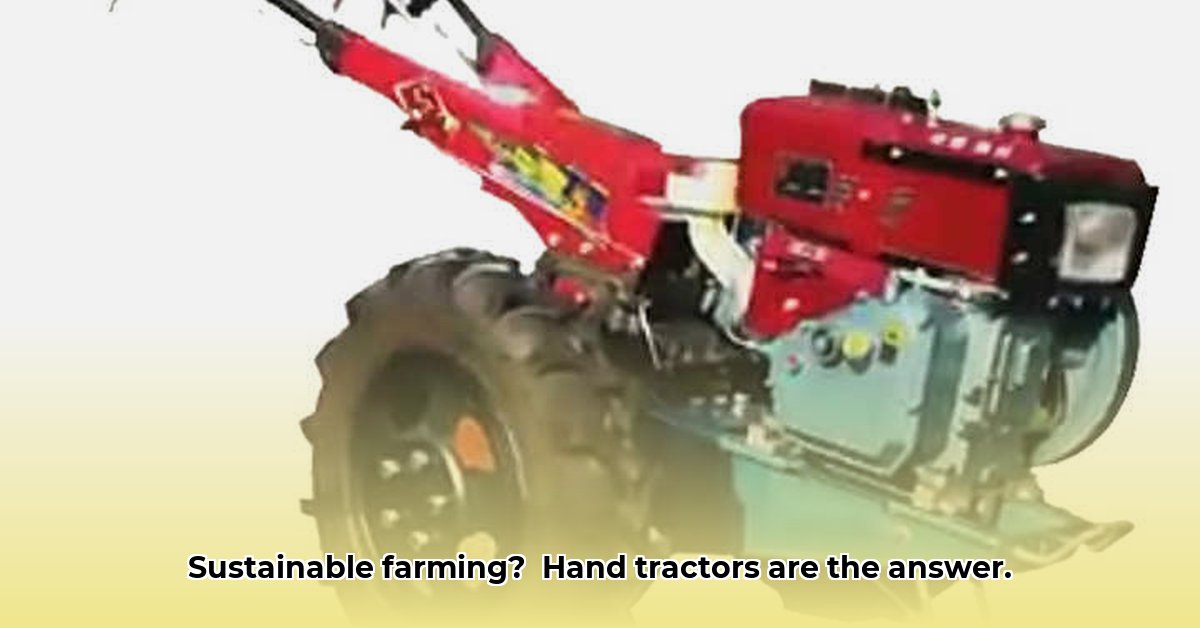
Hand Tractors and the Future of Sustainable Agriculture
Hand tractors are gaining popularity among farmers prioritizing sustainable practices. These smaller machines offer a compelling alternative to larger, fuel-intensive equipment, promising less soil compaction and improved precision in crop cultivation. But how effective are these machines in real-world applications? And is Earth Tools, a North American supplier primarily featuring BCS and Grillo brands, truly the market leader they claim to be? A closer examination is needed. For more on electric options, check out this resource on battery-powered tractors.
Earth Tools presents itself as a major player, boasting a wide selection of over 45 implements, some unique to their offerings. However, their claims of substantial market share require independent verification. While their website provides information, we must critically evaluate these assertions with data from independent sources. A comprehensive market analysis is needed to accurately assess their market position.
The appeal of hand tractors in sustainable farming stems from their efficiency and reduced environmental impact. Their smaller size minimizes soil compaction and fuel consumption compared to larger tractors, contributing to a gentler, more sustainable approach to land management. Their versatility is another significant advantage. With the right attachments, a single hand tractor can perform a wide range of tasks, streamlining the farming process and saving both time and money. Earth Tools' extensive implement inventory supports this claim, but again, impartial validation is necessary to fully appreciate the breadth and effectiveness of their offerings.
Earth Tools highlights its robust service and support network, claiming a substantial parts inventory valued at $250,000 and a skilled in-house technical team. Reliable service is vital for small-scale farmers where downtime can have significant financial consequences. However, unbiased assessments, such as independent farmer reviews and testimonials, are needed to fully evaluate the effectiveness of their support system.
Currently, Earth Tools' reach is primarily limited to North America. This geographic constraint necessitates caution in evaluating the overall sustainability impact of their tractors. While the benefits are likely significant within North America, a global perspective is needed for a comprehensive assessment. Comparative studies between hand tractors and larger equipment in diverse regions and farming systems are crucial for a thorough understanding of the long-term benefits and potential drawbacks.
Assessing the Market and Earth Tools' Position
Key Takeaways:
- Earth Tools' claims of market dominance require independent verification through comprehensive market research.
- The environmental benefits of hand tractors are significant but need further research across various agricultural settings globally.
- Earth Tools' service and support network needs external validation through farmer testimonials and independent reviews.
Areas for Future Research and Growth
Several key areas warrant further investigation:
Global Expansion: To amplify the impact of hand tractors, Earth Tools should explore global expansion through strategic partnerships with sustainable agriculture companies. This will broaden their reach, knowledge base, and expertise.
Farmer Training and Collaboration: Investing in farmer training and fostering knowledge sharing through peer-to-peer learning can accelerate the adoption of best practices and enhance the efficiency of hand tractor use.
Competitive Innovation: Competitors should respond to Earth Tools' success by improving their product offerings, focusing on superior customer service and innovative technological advancements. Continued innovation within the hand tractor market is essential for progress in sustainable agriculture.
Choosing the Right Hand Tractor for Your Sustainable Farm
Selecting the appropriate hand tractor requires careful consideration of several factors. This decision is crucial not only for efficiency but also for long-term sustainable farming practices. Ignoring these factors can lead to significant problems down the road.
A Step-by-Step Guide to Selecting Your Hand Tractor
Before you begin your search, take time to understand your specific needs:
Define Your Tasks: What are your primary farming tasks? (Tilling, cultivating, mowing, etc.) This will determine the type of tractor and attachments needed.
Measure Your Farm Size: The size of your operation directly impacts the type of tractor suitable for your needs. Smaller farms may require lighter, more maneuverable models.
Evaluate Your Soil Type: Soil type (clay, sandy loam, rocky) significantly influences tractor selection. Heavier soils necessitate more powerful machines with better traction.
Assess Parts Availability: Ensure ready access to spare parts in your area. Reliable maintenance is essential for machine longevity.
Set a Realistic Budget: Hand tractors vary widely in price. Establish a budget to guide your purchase decision.
Test Drive (When Possible): Test driving different models allows you to assess maneuverability, ease of use, and overall suitability.
Key Features to Consider:
| Feature | Important Considerations |
|---|---|
| Engine Power (HP) | Higher horsepower offers greater power for demanding tasks, but also increases fuel consumption. |
| Transmission Type | Manual transmissions are generally cheaper but require more skill; automatic transmissions offer user-friendliness but at a higher cost. |
| Weight & Maneuverability | Lighter models are easier to handle but may lack traction; heavier models are more effective in challenging conditions but are less maneuverable. |
| Attachments | Verify the availability and compatibility of attachments for your specific needs. |
The Sustainability Imperative
Choosing a hand tractor is a decision that extends beyond performance; it has significant sustainability implications. Consider fuel efficiency and the long-term environmental impact of your choice. While more research is needed on the environmental footprint of these machines, fuel-efficient engines and responsible tractor usage significantly reduce environmental impact. Remember, smart usage is sustainable usage!
Choosing the right hand tractor is a significant investment in sustainable farming practices. By carefully evaluating your farm's needs and the features of available models, you can make an informed decision that will benefit your operation for years to come.